


Top 10 WordPress CDNs for 2026 (And The Worst)
In 2026, Cloudflare and QUIC.cloud remain industry leaders, but FlyingCDN’s standalone Cloudflare Enterprise offering has shaken up the market. Static sites benefit from Cloudflare’s APO or QUIC.cloud’s standard plan, while dynamic and WooCommerce stores should leverage Argo Smart Routing or full Cloudflare Enterprise for maximum speed and protection.
Key Features To Look For In Your CDN
- Network Size: Check PoPs and Tbps on a provider’s network page.
- Dynamic Caching: Full-page caching to reduce TTFB by up to 72%.
- Smart Routing: Routes requests via the fastest paths to cut TTFB another 33%.
- Security: WAF, bot mitigation and DDoS shields that offload origin servers.
- Image Optimization: On-the-fly resizing and compression without extra server load.
- Low Latency: More edge locations means faster Time To First Byte and better Core Web Vitals.
1. FlyingCDN’s Cloudflare Enterprise
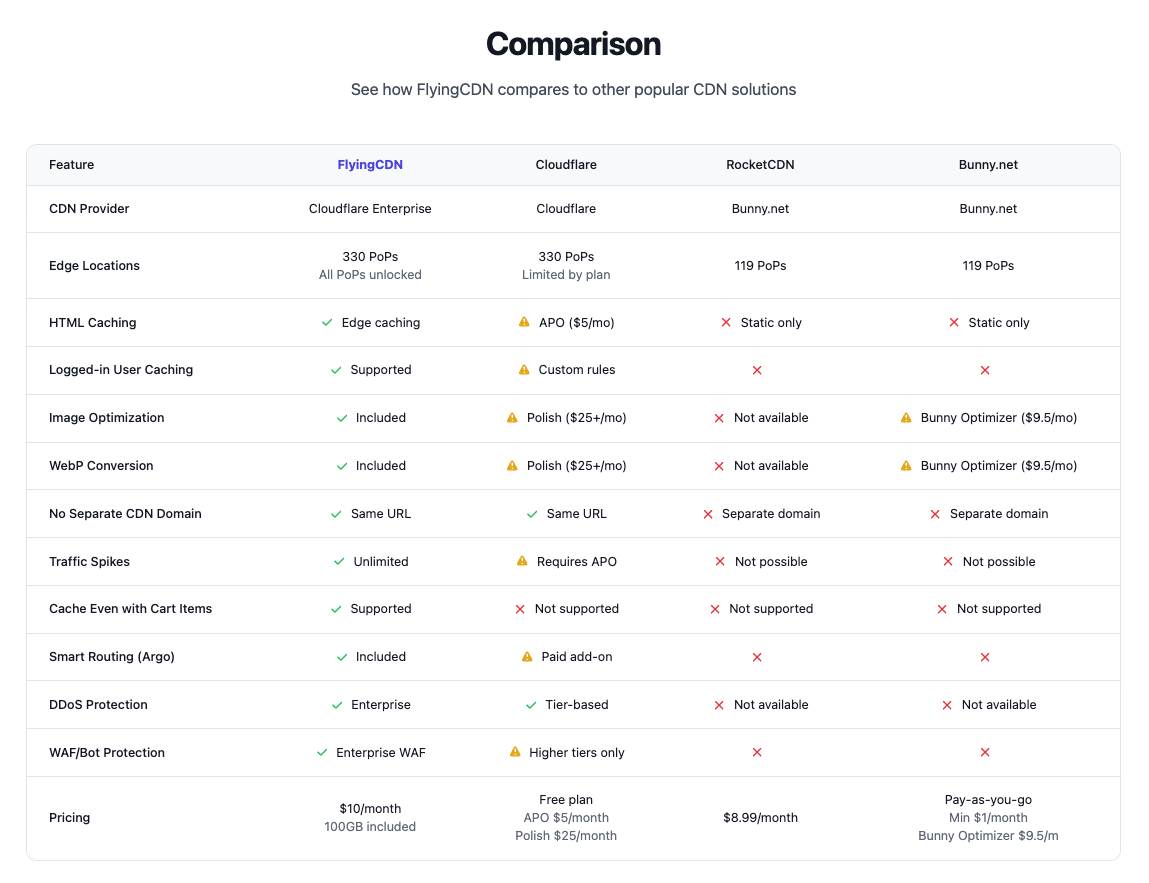
FlyingCDN lets you deploy Cloudflare Enterprise on any host—no legacy hardware or limited integrations. You get full page caching, Argo Smart Routing, Mirage & Polish support, and complete dashboard access. Benchmarks show TTFB and wp-admin speeds surpass those on Rocket.net or Cloudways.
2. Cloudflare
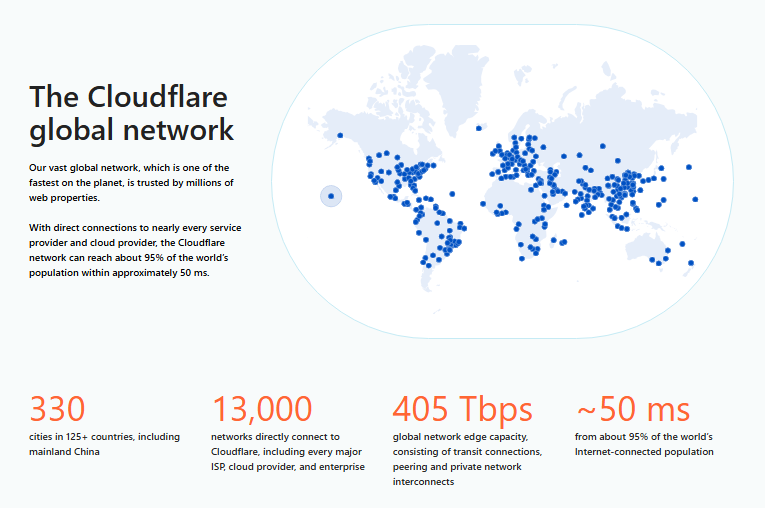
For most static WordPress sites, Cloudflare’s free plan plus APO ($5/mo) or a full-page caching plugin delivers excellent speed and security. You maintain full control in the Cloudflare dashboard, enable Early Hints, Hotlink Protection, Full (Strict) TLS, and optionally add Argo Smart Routing for dynamic content.
3. QUIC.cloud
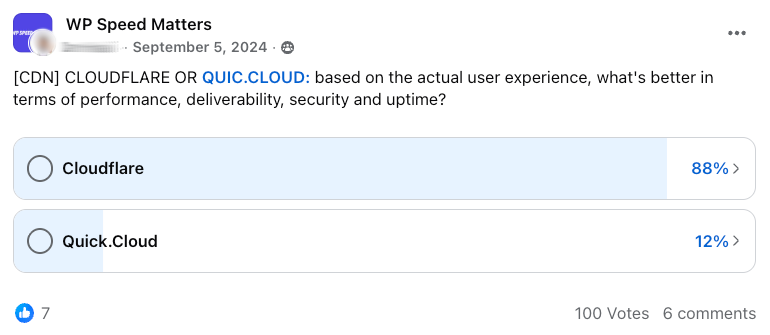
Designed for LiteSpeed servers, QUIC.cloud integrates with LiteSpeed Cache to power image optimization, HTML caching, and HTTP/3 backend connectivity. The paid standard plan unlocks all 80+ PoPs, DDoS protection, and accurate geo-routing via QUIC DNS. Monthly credits cover low-volume sites.
4. Bunny.net
Bunny.net offers a lean global network with competitive bandwidth pricing. Use its powerful image optimizer (Bunny Optimizer) alongside Cloudflare for layered caching. Create a Pull Zone, enter the CDN URL in the BunnyCDN plugin, and configure advanced caching and optimizer settings in the dashboard.

5. Amazon CloudFront
CloudFront boasts over 600+ edge locations and tiered pricing across regions. It’s highly performant but more complex to set up: you must create an S3 origin, configure a distribution, and adjust cache behaviors for WordPress assets or dynamic pages.

6. Fastly
Fastly’s 95 PoPs deliver 377 Tbps global capacity and instant purge controls. After creating a service and API token, use the Fastly plugin to integrate with WordPress and fine-tune VCL settings for custom caching rules.

7. SiteGround CDN
SiteGround’s free CDN lacks dynamic caching, and its $14.99 premium add-on offers minimal features. It requires SiteGround DNS, which in 2021 was briefly blocked by Google, causing mass indexation issues.

8. WP Engine CDN
WP Engine’s built-in CDN provides Cloudflare Polish and Layer 3/4 DDoS protection, but no full page caching or dashboard access. Hosting plans also impose strict visit, bandwidth, and storage limits.

9. Kinsta CDN
Kinsta’s Cloudflare integration adds full page caching and basic firewall rules, but bandwidth caps and limited features lead to frequent plan upgrades and mixed TrustPilot feedback.

10. WPX XDN
WPX XDN is free but only has 42 PoPs and lacks full page caching. Outages and limited redundancy make it a last-resort option compared to QUIC.cloud on LiteSpeed or direct Cloudflare.

Cheers,
Tom