

Why a Keyword List Is Your SEO Blueprint
A well-structured keyword list serves as the foundation for your SEO strategy. It defines which phrases to target in your content, how to organize your URLs, and even guides your link-building efforts. If your keyword list is incomplete or poorly researched, you’ll waste time re-optimizing content and miss out on ranking opportunities. Follow this guide to assemble an organized, data-driven list that puts you on the path to page 1.
Target Your Location First
Begin by determining the geographic scope of your business. Your location influences search volume and competition:
- Small town – Lower search volume; focus on one broad, primary keyword for your homepage.
- Large city – Higher volume; include both broad and more specific phrases to capture varied user intent.
- National – Vast keyword pool; you must research competition versus search volume to find realistic targets.

1. Small Town: Choose Broad Keywords
Use Google Autocomplete to discover popular search terms in your community. In Google.com, type your town name plus services you offer to see real-time suggestions. For example:

If you serve multiple towns, repeat this process for each location. Your list might look like:
- lake bluff apple repair (homepage)
- lake forest apple repair (location page)
- highland park apple repair (location page)
2. Large City: Choose Specific Keywords
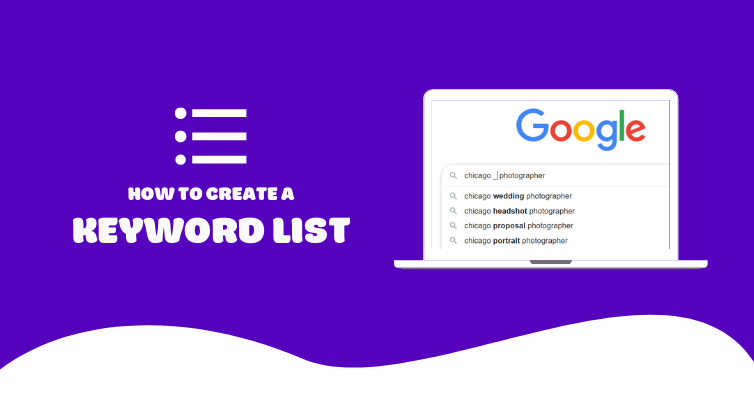
In bigger markets, add long-tail phrases alongside broad keywords. Try the “fill-in-the-blank” trick with Google Autocomplete for more ideas:


Compile mini-lists for each product or service:


3. National: Combine Specific Keywords with Competitive Research
For nationwide targeting, narrow your list by evaluating how competitive each phrase is relative to its volume. Focus on long-tail opportunities with realistic ranking potential:

Example: “macbook pro laptop repair” is highly competitive, but “macbook pro water damage repair” is more attainable:

And remember: it’s better to rank on page 1 for a niche term with 100 searches than languish on page 13 for 10,000 searches:

Analyze Competitor Keywords
Run competitors through a tool like Semify Web Grader to uncover their top-ranking phrases:

Finalize Your Keyword List
When your research is complete, refine your list:
- One primary keyword per page: Combine synonyms and related phrases under a single, most relevant term.
- Homepage keyword: Target your main business offering.
- Blog keywords: Use Google Autocomplete to select long-tail, informational terms (e.g., “how to fix a macbook pro white screen”).
Bonus: Plan Your URL Structure
Map your URLs to your keyword list before site build:
- website.com/ (homepage)
- website.com/macbook-pro/
- website.com/macbook-pro/water-damage-repair
For location pages:
- website.com/locations/chicago/macbook-pro-laptop-repair
- website.com/locations/springfield/macbook-pro-laptop-repair
- website.com/locations/miami/macbook-pro-laptop-repair
Need Help?
Once your keyword list and URL structure are set, add optimized content using your target phrases in titles, meta descriptions, and page copy. If you have questions or want feedback on your list, leave a comment below!